What a Hospital Bed Taught Me About eCommerce
From 15 surgeries to launching ALDI's Swiss online store at midnight. 25 years in eCommerce, 8 years in Switzerland. This is how I got here.
I spent my 20th birthday in a hospital bed. A car ran a stop sign. My motorcycle didn't stand a chance.
Four years. Fifteen surgeries. An endless negotiation with doctors who wanted to amputate and a 20-year-old kid who refused to let them.
Nobody hands you a manual for that kind of uncertainty. You figure it out one surgery at a time. And what you learn becomes part of your operating system forever. That operating system is what I now use to help brands build and run eCommerce operations in Switzerland.
The warehouse where it all started
Before the accident, before the surgeries, before Switzerland — there was my grandfather's warehouse in Malaga.
I was 17. He ran a wholesale distribution business supplying bars, restaurants, and grocery stores across the coast. I was supposed to help with inventory. Instead, I found an old computer in the back office and started teaching myself UNIX.
That warehouse smelled like cardboard and olive oil. Trucks came in at 5 AM. Orders went out by noon. I watched how commerce actually worked — not in a textbook, but in a loading dock. Products in, money back, relationships that lasted decades because you delivered on time and didn't cut corners.
Then I discovered the internet. And the dots connected instantly: internet + commerce = eCommerce.
I didn't know the word yet. But I knew exactly what it meant.
Day 27 of the ALDI launch
Fast forward 25 years. I'm sitting in an office in Zurich. It's midnight. My phone buzzes — the PM asking if we'll make the deadline.
Three days until launch. ALDI's Swiss online store — aldi-now.ch — was supposed to go live on Friday. The payment gateway had failed in testing that afternoon. Swiss Post's API was returning errors nobody had documented. The German localization team had sent files in Hochdeutsch, but Swiss German customers don't buy from stores that sound like they're from Hamburg.
I said yes. We'd make it.
I wasn't sure.
We launched on time. Not because we were brilliant — because we'd been in enough tight spots to know that panic is a luxury you can't afford. You break the problem into pieces, fix what you can fix tonight, and deal with the rest at 6 AM.
That's what 15 surgeries teach you. Not resilience as a LinkedIn buzzword. Resilience as an operating rhythm. One problem at a time, one day at a time, until the thing works.
Switzerland is not another European market
After the ALDI launch, I worked on Jumbo.ch — a complete Spryker-based eCommerce platform serving millions of Swiss customers. Different stack, different scale, same lesson: Switzerland breaks every assumption you bring from other markets.
Four official languages. A payment method — TWINT — that 5 million people use daily and most foreign brands have never heard of. Data protection laws that make parts of GDPR look relaxed. A postal system where "next day delivery" means something different in Zurich than in Lugano. A VAT rate that changed to 8.1% and tripped up every store that hadn't updated their tax configuration.
I learned all of this the hard way. Eight years of hard way. And each time I thought I understood the Swiss market, it surprised me again.
A Spanish DTC brand once asked me: "Is Switzerland just like selling in Germany but smaller?"
I laughed. Then I spent 90 minutes explaining why that assumption would cost them six figures.
What the hospital installed
Here's what I've figured out after 25 years of building eCommerce platforms across Europe, and 8 years of doing it specifically in Switzerland:
The ability to rebuild is more valuable than the ability to build.
Every market entry is a rebuild. The brand that worked in Spain doesn't automatically work in Switzerland. The checkout flow that converts in Germany fails here. The logistics partner that delivers in France doesn't operate the same way with Die Post.
You have to rebuild. And most people find that paralyzing.
I find it familiar.
When you've negotiated with surgeons about keeping your leg, negotiating with Swiss banks about opening a business account feels manageable. When you've rebuilt your body through 15 operations, rebuilding a payment integration for the Swiss market is just Tuesday.
What I'm doing now
I'm based in Baar, Canton Zug — the heart of the most business-friendly region in Europe. 11.8% corporate tax rate. The lowest in Switzerland.
I help brands build and launch their eCommerce operations in Switzerland. Shopify stores with proper Swiss localization. TWINT and PostFinance integration. nFADP-compliant data handling. Logistics with Die Post and DPD. The full stack — not a PDF with recommendations, but the actual working store.
I speak Spanish natively, English professionally, and enough German to navigate the bureaucracy in Zug (working on it — A2 exam this month).
I'm documenting everything I learn on this blog. The Swiss market insights, the technical how-tos, the mistakes I've seen brands make — and the ones I've made myself. The kind of content I wish existed when I first arrived here.
If you're a DTC brand thinking about Switzerland, let's talk. I'll tell you honestly if it makes sense for your brand.
Keep reading
Why TWINT Is Non-Negotiable for Selling in Switzerland
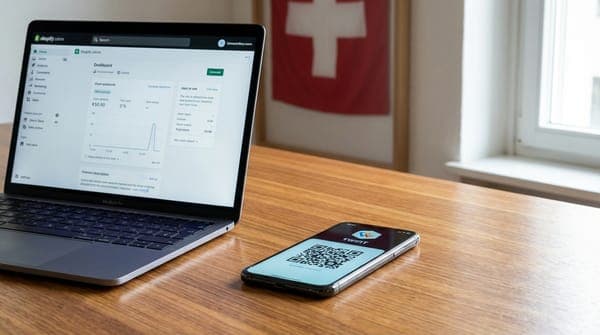
Technical GuidesTWINT has over 5 million active users in Switzerland. If your Shopify store doesn't offer it, you're losing sales at checkout. Here's what you need to know.